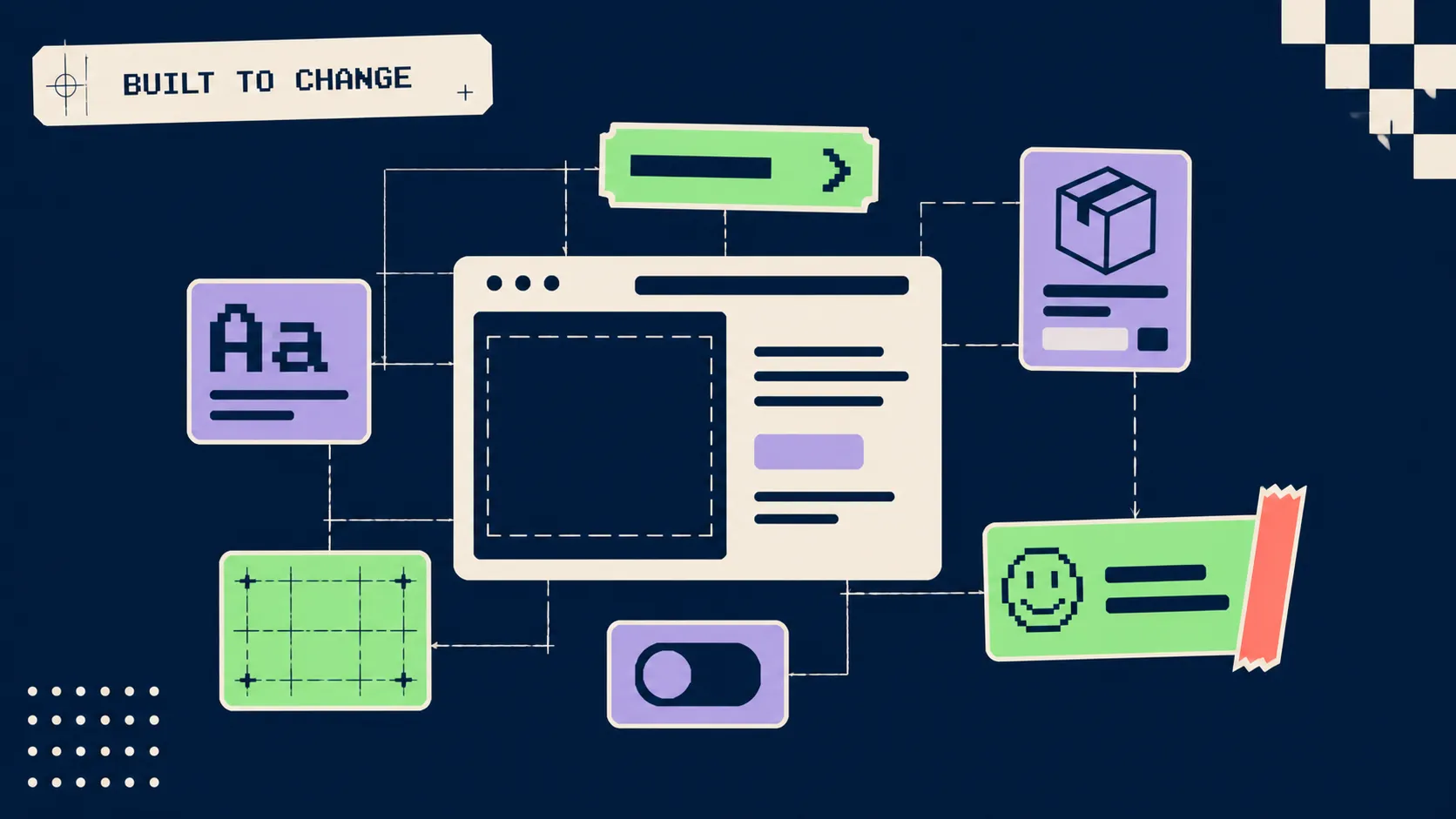

Headless Shopify separates the customer-facing experience from Shopify’s theme layer. Shopify still manages products, customers, orders and checkout, but a separate frontend is responsible for presenting the store. That can unlock unusual experiences, but it also changes how the business builds, tests and maintains ecommerce.
The appeal is easy to understand. A brand may want richer storytelling, more control over interaction design or a storefront that connects several products and services in one experience. When a conventional theme genuinely blocks an important customer journey, headless can give a capable team more room to solve it well.
The mistake is treating headless as the premium version of Shopify. It is not automatically faster, more distinctive or better at converting. It is a different technical model with different costs. The right question is whether the extra freedom solves a valuable constraint that cannot be addressed sensibly within Shopify’s existing architecture.
Before choosing a direction, write down the commercial problem in plain language. If the reason is simply that the current store feels generic, a stronger design system or a well-built custom theme may solve the problem with far less operational complexity.
Start with the parts of the customer experience that are currently compromised. Perhaps customers need to configure a complex product, move between content and commerce without friction, or use a service that sits across several back-office systems. These are meaningful constraints because they affect how people understand and buy.
Then test whether those constraints are genuinely architectural. Shopify themes are more flexible than many teams assume, particularly when sections, blocks and structured content have been planned properly. An awkward store is often the result of weak information architecture or accumulated theme debt rather than a hard platform limit.
Headless becomes more credible when the desired experience depends on several systems behaving as one. A single frontend might need to combine Shopify commerce, editorial content, account information, subscriptions and real-time product data. In that situation, separating presentation from the commerce engine can create a clearer technical boundary.
Be honest about frequency and value. Building a complex architecture for one campaign page or a rarely used feature is difficult to justify. The constraint should affect an important journey, meaningful revenue or the organisation’s ability to evolve the experience over time.
A headless project creates at least two products to manage: the commerce platform and the frontend application. That means separate deployment processes, monitoring, testing and technical ownership. Changes that would once have been handled in the Shopify editor may now require development support.
Content operations deserve particular attention. Marketing teams need to understand where content lives, how previews work and which changes can be made without a release. If a new architecture reduces the team’s ability to publish quickly, creative freedom for developers may become operational friction for everyone else.
The integration layer also needs ongoing care. APIs change, third-party services fail and data can become inconsistent between systems. A reliable headless store needs clear error handling, observability and someone responsible for diagnosing problems when the customer experience and Shopify disagree.
Build a realistic total-cost model covering hosting, development capacity, quality assurance, monitoring and future upgrades. Compare that with the cost of improving a custom Shopify theme. The initial build is only the beginning; the more useful comparison is what each model will take to operate well for the next three years.
Creative flexibility should never weaken the essentials of shopping. Product availability, pricing, promotions, search, analytics and checkout handoff all need to remain accurate. A beautiful frontend that occasionally shows stale stock or loses attribution creates a more expensive problem than the one it was meant to solve.
Performance must be designed and monitored rather than assumed. Headless can be fast, but it can also ship large JavaScript bundles, delayed content and unstable interfaces. Measure real customer journeys on representative devices instead of relying on the idea that a modern framework guarantees speed.
Accessibility and SEO need the same discipline. Semantic markup, keyboard behaviour, structured data, metadata and crawlable navigation should be part of the architecture from the start. Recreating capabilities that Shopify themes normally provide can take significant work, especially across international stores.
Plan for failure as well as the happy path. Customers should receive clear feedback when a service is slow, a product changes availability or an integration cannot respond. Resilient commerce feels calm when systems are under pressure; it does not expose technical complexity to the person trying to buy.
Headless Shopify is worth considering when the commercial opportunity is clear, the experience genuinely needs it and the business can support the operating model. It works best for teams with mature technical ownership and a roadmap that benefits repeatedly from the added flexibility.
For many growing brands, a strong custom theme remains the better decision. It keeps teams close to Shopify’s ecosystem, reduces maintenance and allows marketers to work quickly. Distinctive design comes from clear thinking, useful content and consistent interaction patterns, not from architecture alone.
A useful decision process compares three routes: improving the existing theme, building a more considered custom theme, and moving headless. Score each against customer value, speed to market, operational effort and long-term cost. That turns an exciting technology choice into a practical business decision.
The goal is not to build the most sophisticated storefront. It is to create an experience customers can understand and the organisation can improve confidently. Choose headless when its freedom will be used and supported; otherwise, simplicity is usually the more scalable advantage.


.svg)
.svg)
.svg)

.svg)

.svg)