

Turning a technical catalogue into a journey customers could understand
Worktop City sells products that are difficult to understand from a conventional product grid. Customers need to compare materials, finishes, dimensions and edge profiles, often without seeing the surface in person. The old journey placed too much of that work on the customer and made a broad, valuable range feel harder to buy than it needed to be.
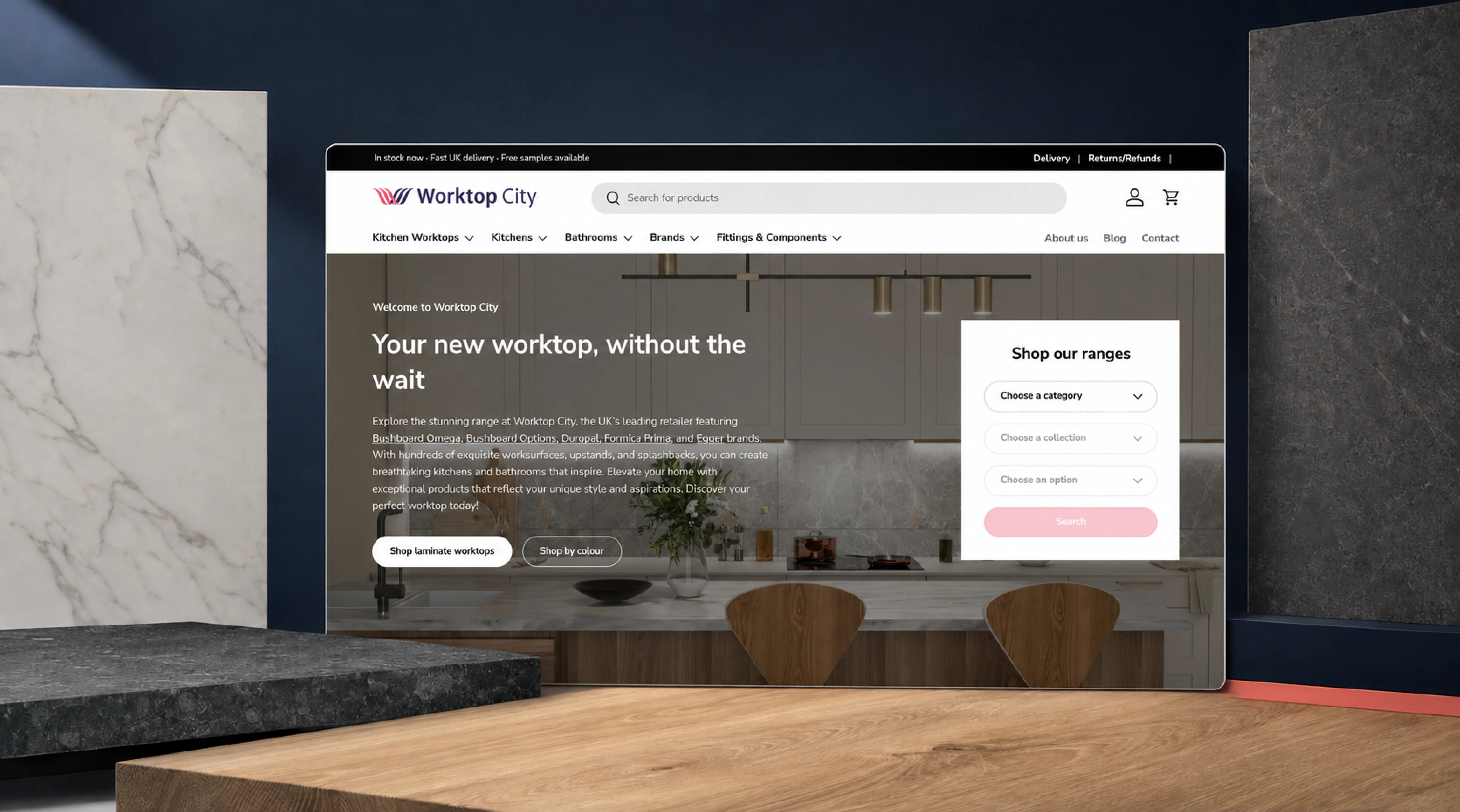
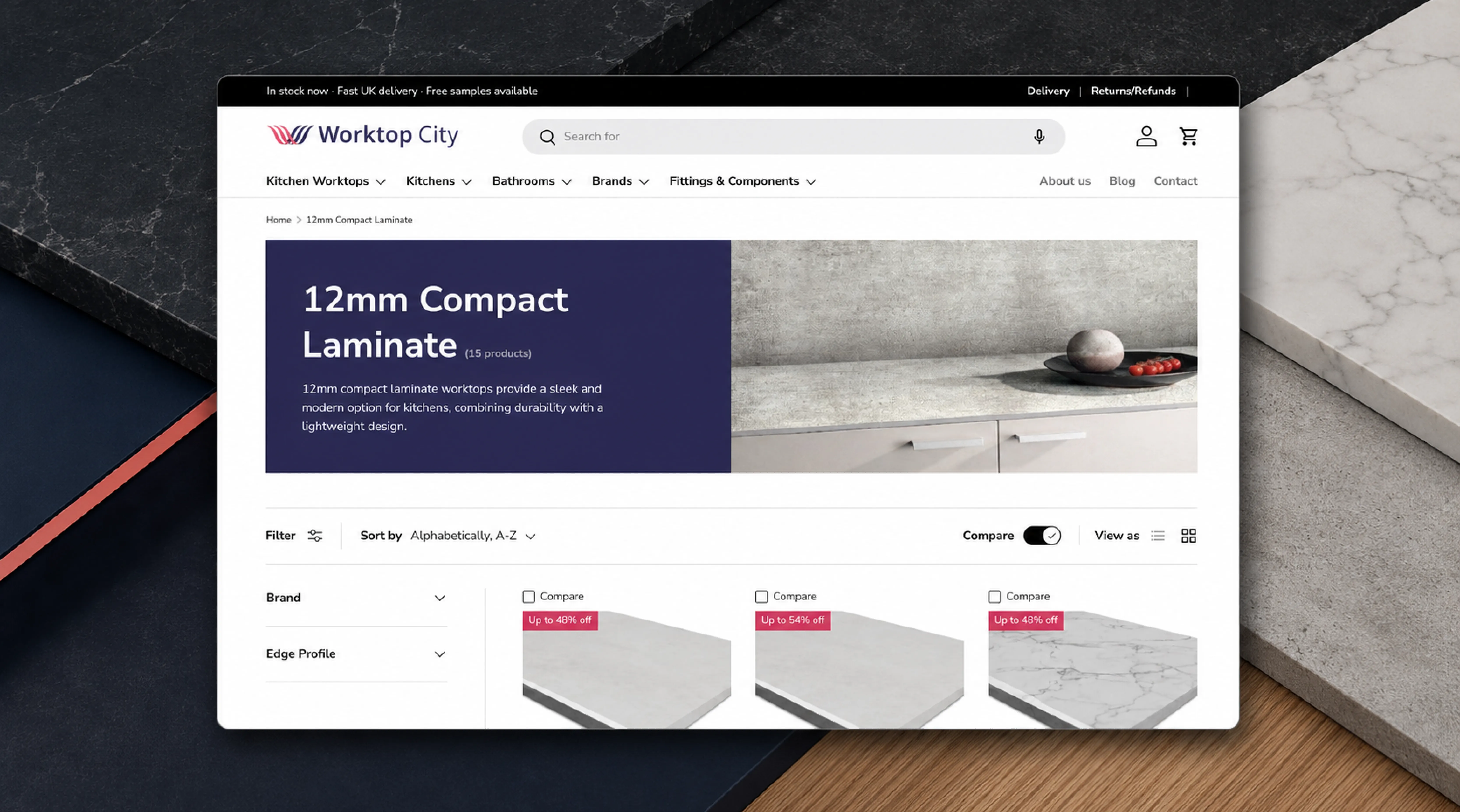
We planned the Shopify structure around the decisions customers make before ordering. Product families were reorganised, navigation was simplified and product pages were designed to explain the differences that matter. The website and mobile imagery shows that new hierarchy in action, giving customers a clearer route from inspiration to a suitable product.
CGI became an important part of the system. Instead of relying on inconsistent or impractical photography, we created a scalable visual approach that could show surfaces, textures and product details consistently across the store.
Making Shopify the centre of product discovery and demand
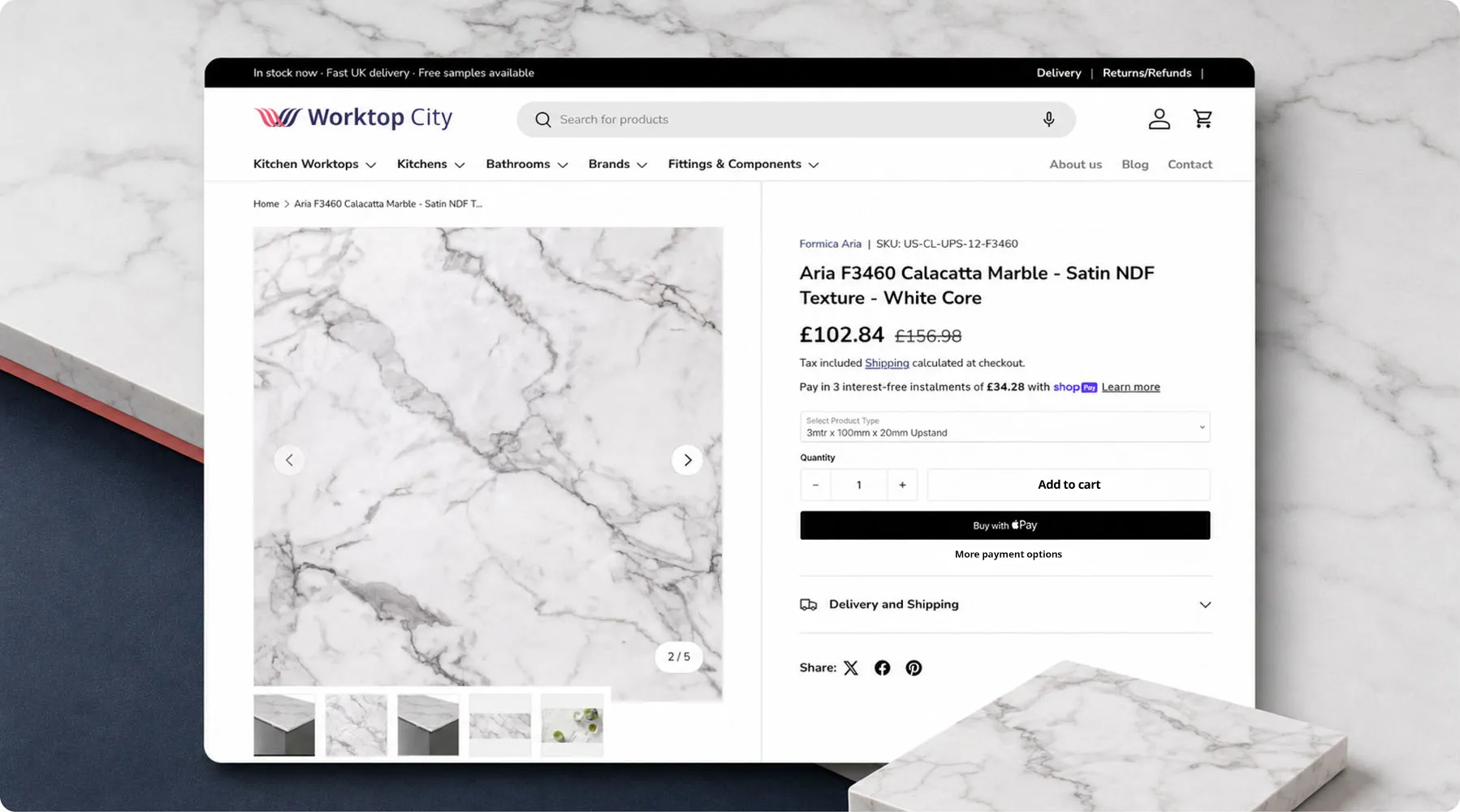
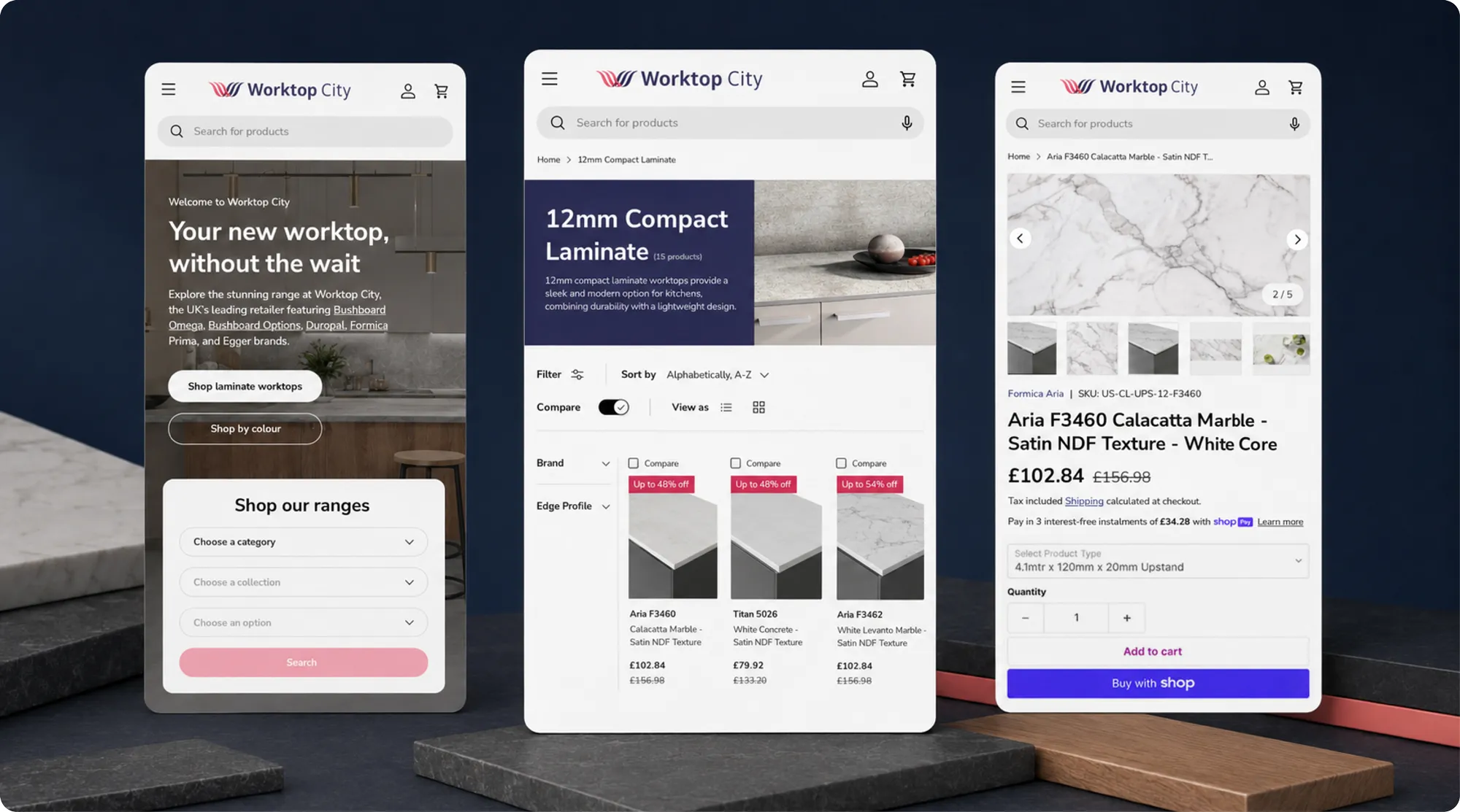
The product detail and mobile screens show how the new store brings essential buying information closer to the point of decision. Customers can understand the product, compare options and move towards purchase without losing confidence as the journey moves between devices.
The same product structure and CGI assets support paid search, organic discovery, email and offline sales material. Each campaign arrives at a store designed to continue the conversation, while brochures and showroom materials reinforce the same product story.
With Shopify acting as the commercial centre, monthly revenue increased by £50,000, monthly visitors grew threefold and Google Ads delivered a 9.1x return during the measured period.

Worktop City shows what happens when platform, product presentation and ongoing growth activity are treated as one commercial system.

If you’re looking for solutions to drive real growth, we’re the team that makes it happen.
.svg)







.svg)













.svg)
.svg)
.svg)

.svg)

